Asal Uttar: A Saga of Gallantry-1965 War to Now
On a muggy warm morning of the month of September 1965, the villagers of Asal-Uttar heard a distant rumbling, disturbing the tranquil green environs. The village of Asal Uttar lies on the upper bank of River Satluj– a settlement of the Jat Sikh families who migrated here in Patti region banished from their their 400 years old Aasal-village; left behind in what was to be called Pakistan! Across the sugarcane fields, the canals and clay lanes of the small border village, Pakistan’s manic thrust into Punjab was underway as powerful American-supplied 80 Patton tanks strategized to enter India through the village and further reach the Grand Trunk road as this terrain was most suitable for them!!
The Indian army prepared by first flooding and water-logging the Sugarcane fields, laid out defense-boxes and later using a mix of Tanks, Artillery and Infantry anti-tank detachments to launch a bitter Battle! The Indian army lured the Pakistan Patton tanks into the water logged fields and after the historic aggressive Battle of Asal Uttar fought with courage and premeditated intelligence; apprehended all the tanks and the area to this day is known as ‘Graveyard of Tanks’ !!
Asal Uttar Military Heritage Site
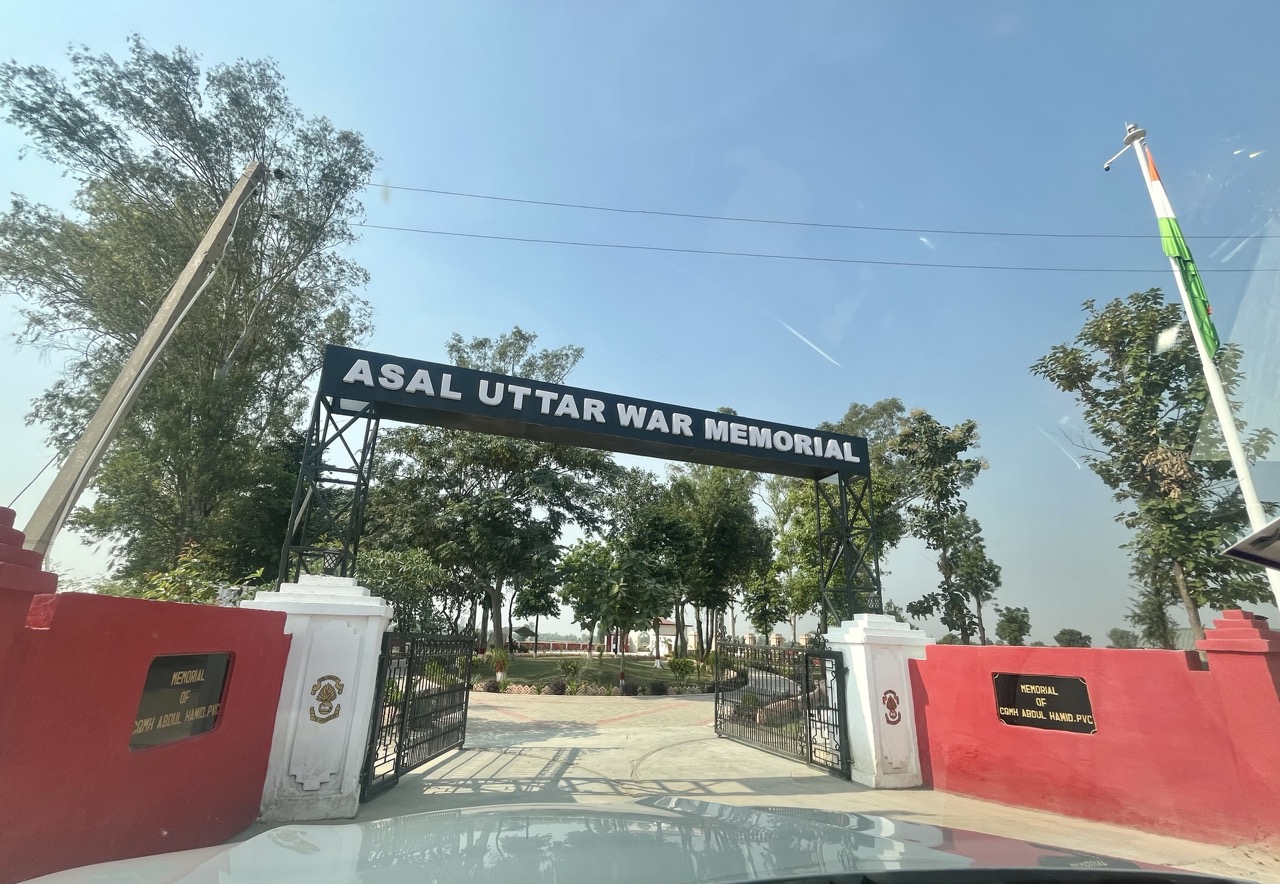
The impressive Entrance to the Asal Uttar War Memorial complex- museums ,Dargah and more
Driving through the natural beauty of Punjab on black ribbon roads we reached the shining signboard of Asal Uttar War Museum. Past the immaculate terracotta red brick wall we caught the first sight of the Mazaar, museums and memorials on our left and right enveloped in green fields beyond.We were about to witness the upgraded Asal Uttar War Memorial and Museum as a First Military Heritage site of Punjab-an exceptional staging of the past for the generations to witness; in the present and future.
INTACH at Asal Uttar
We were met by vivacious Dr Baljit Kaur, an INTACH member who shared information with us in a fascinating manner. INTACH is the Indian National Trust for Art and Cultural Heritage dedicated to conserving protecting and creating awareness about India’s cultural heritage.
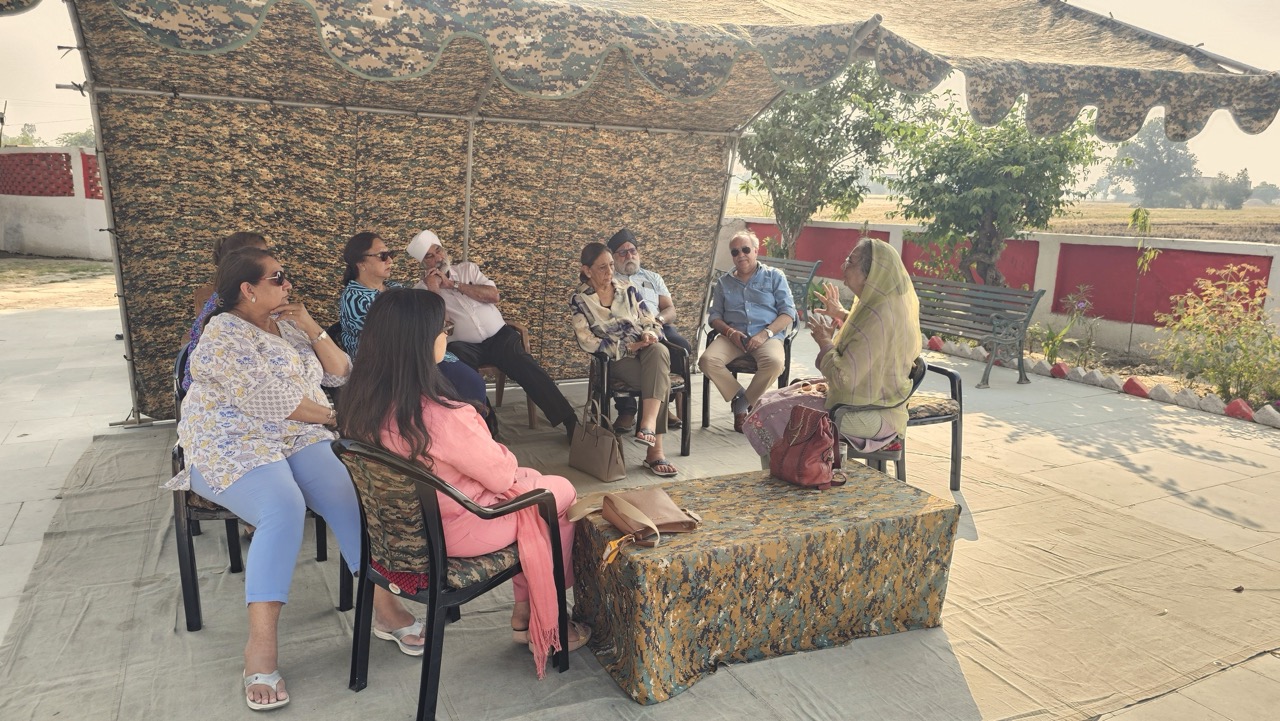
Relaxing under an army tent as INTACH’S Dr Baljit Kaur engagingly unfolded the previous military incidents of 1965 & 1971 Indo -Pak Wars
Dr Baljit commenced that this project was led by the Army’s Golden Arrow Division in collaboration with Punjab INTACH led by Major General Balwinder Singh VSM(Retired). We relaxed under an army tent as she engagingly unfolded the preceding military incidents following which we found ourselves stepping into the Time Machine and found ourselves in the morning of September the 8th 1965 – Nehru had passed away the year before and Lal Bahadur Shastri was the Prime minister.
The Mazaar of Abdul Hamid
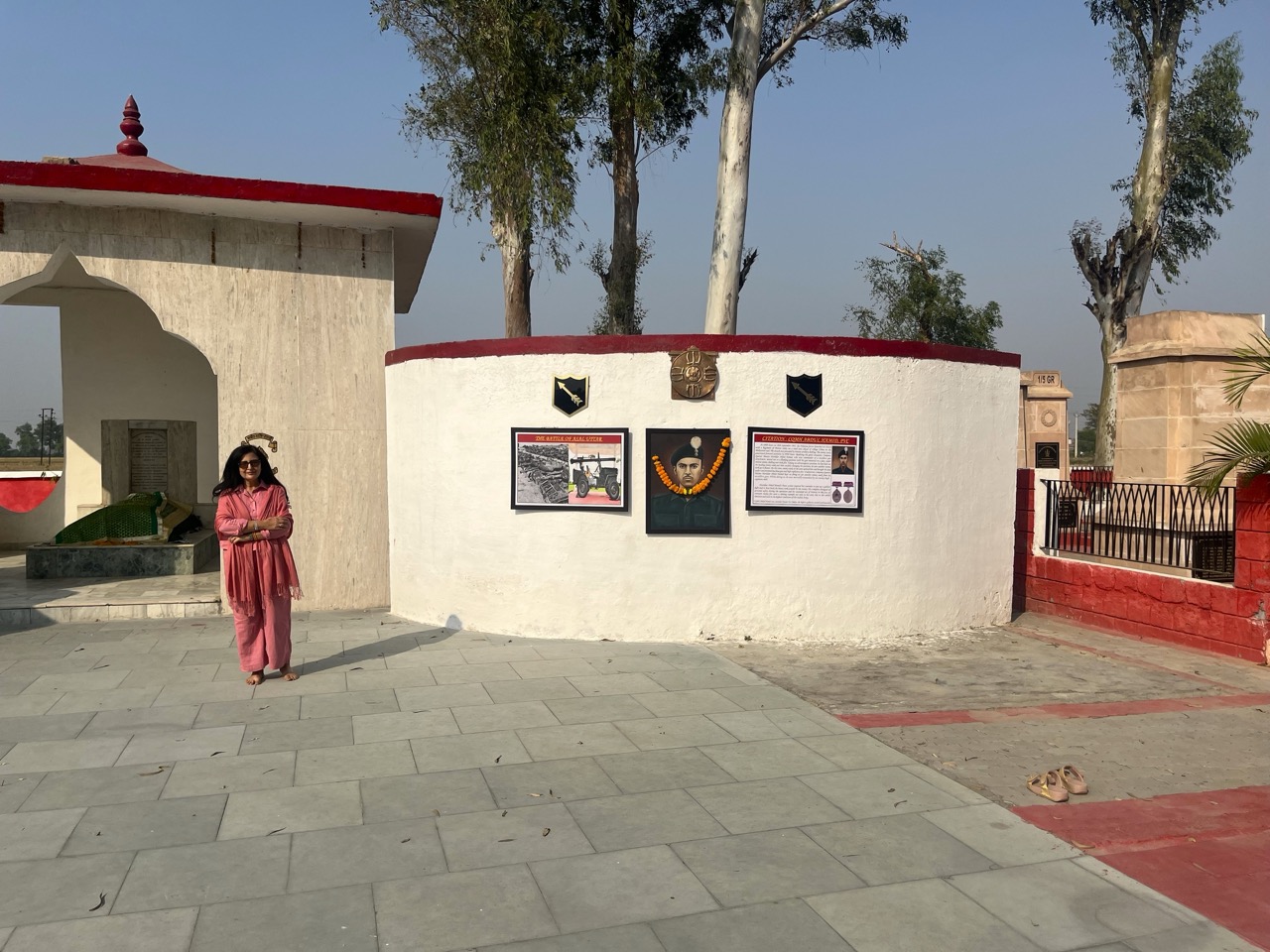
The Mazaar complex inside the Asal Uttar War Memorial
After the engrossing walk into the past we proceeded to the serene-corner white marble Dargah of Abdul Hamid set up as a tribute to the ‘Braveheart’ with the beautiful backdrop of the sapphire sky and emerald fields.
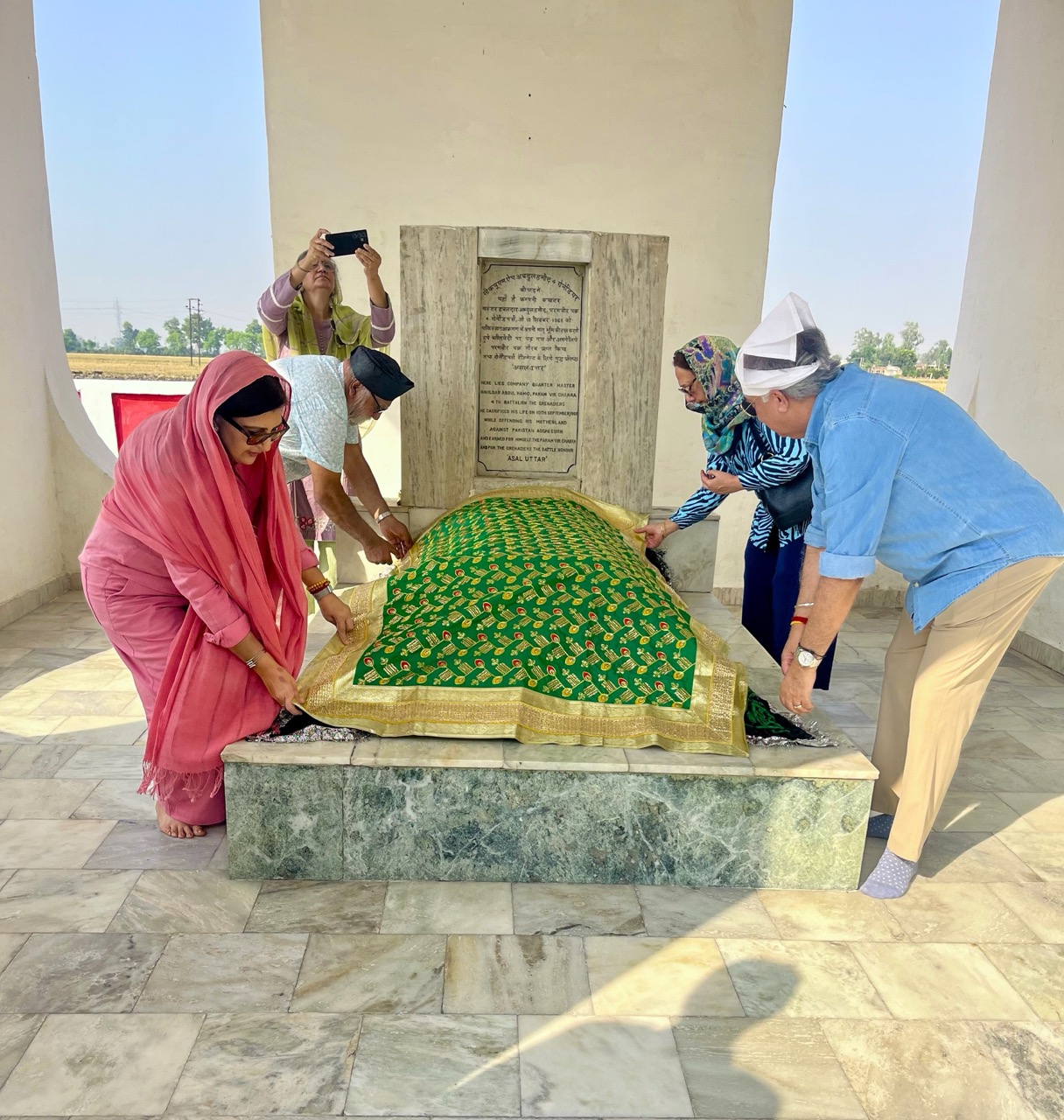
The mazaar of Abdul Hamid- the braveheart icon of the 1965 Indo-Pak war
The gallant story of CQMH Abdul Hamid was retold to us, that is dominant in the accounts of the Indian Army till today-an icon of bravery! He was an RCL Commander of the 4 Grenadiers who attained martyrdom, after he destroyed 3 Patton tanks, some say 7,with only a Recoilless Gun mounted on his jeep.
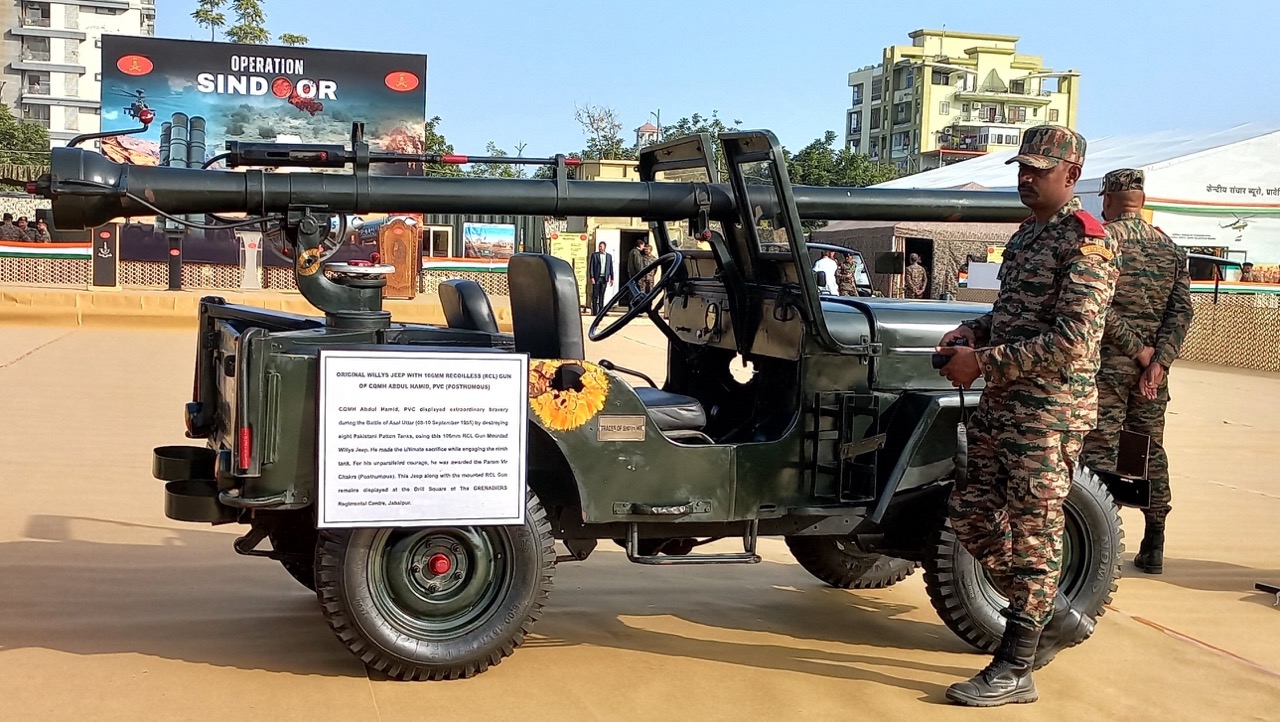
The original Jeep of CQ Abdul Hamid at an Army exhibition in Jaipur that quotes the number of Patton tanks hit as 8
How daring he must been to knock out Tanks by changing positions swiftly, knowing completely his ‘precarious inferior position’ with just a Recoilless Gun! Consequently, he was hit directly by another Patton tank!!
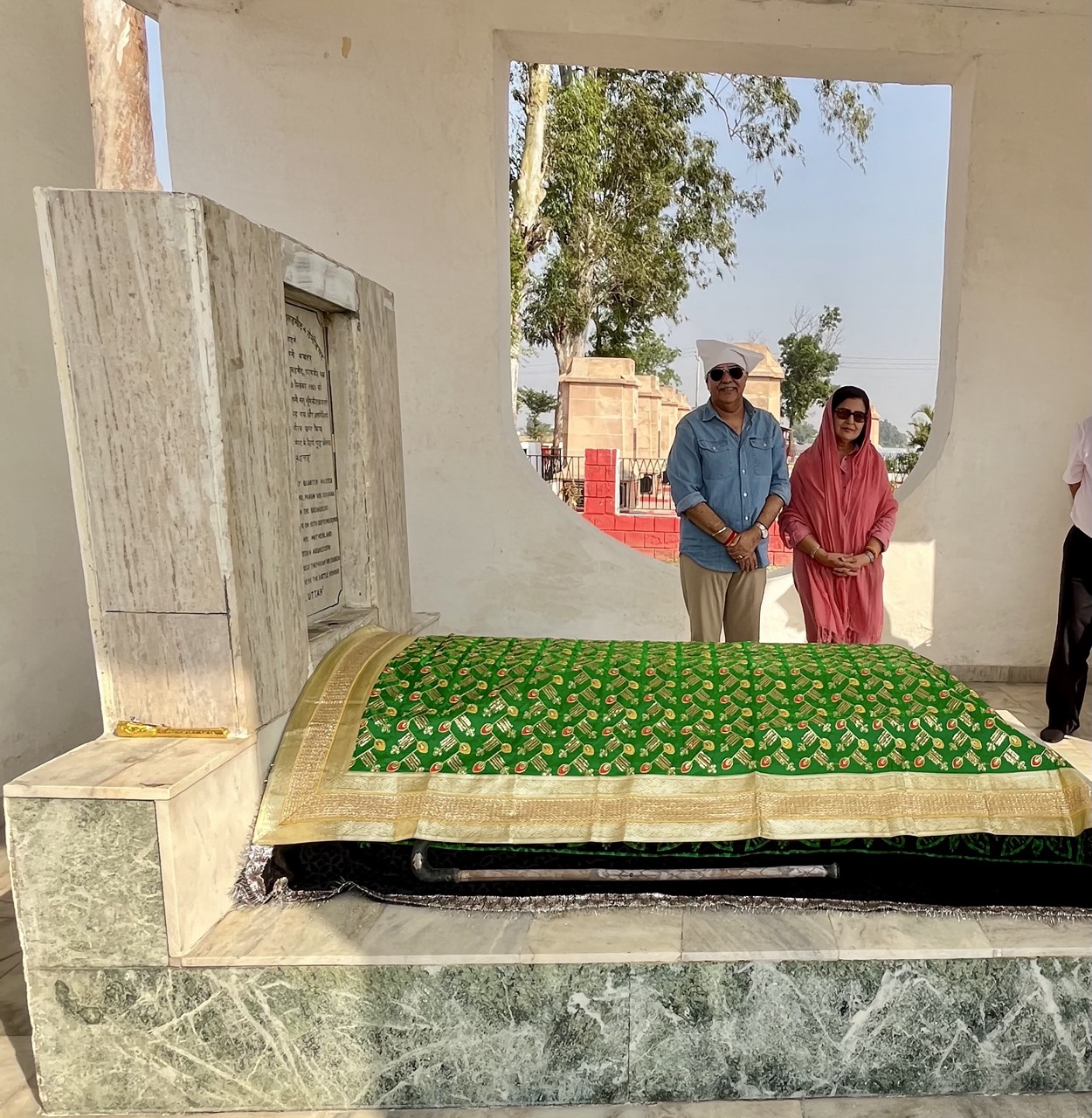
A true tribute- mazaar of Abdul Hamid
As we spread the green bordered Chader on his Mazaar I recalled the lines I read earlier
“Our Flag Does’nt Fly Because The Wind Moves It.
It Flies With The Last Breath of Every Fallen Soldier Who Protected us”
The cool breeze and swaying crops seem to be his breath that join in unison to pay homage to a valiant soldier who was awarded the ParamVir Chakra posthumously. The Asal Uttar Garrison stiffly withstood the attack of the Pakistani tanks and wrecked them!
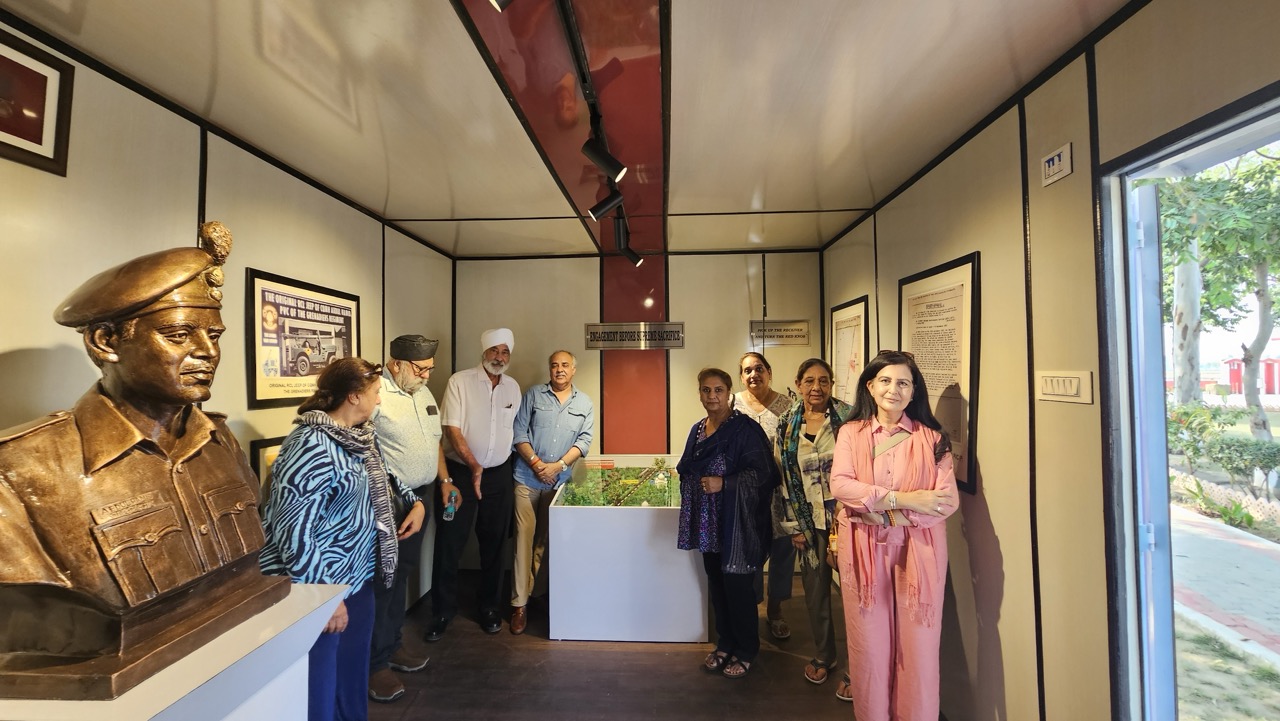
The excellent ,national pride stirrer, Hamid Gallery in the Asal Uttar War Memorial complex
Hamid Gallery- Museum dedicated to Abdul Hamid
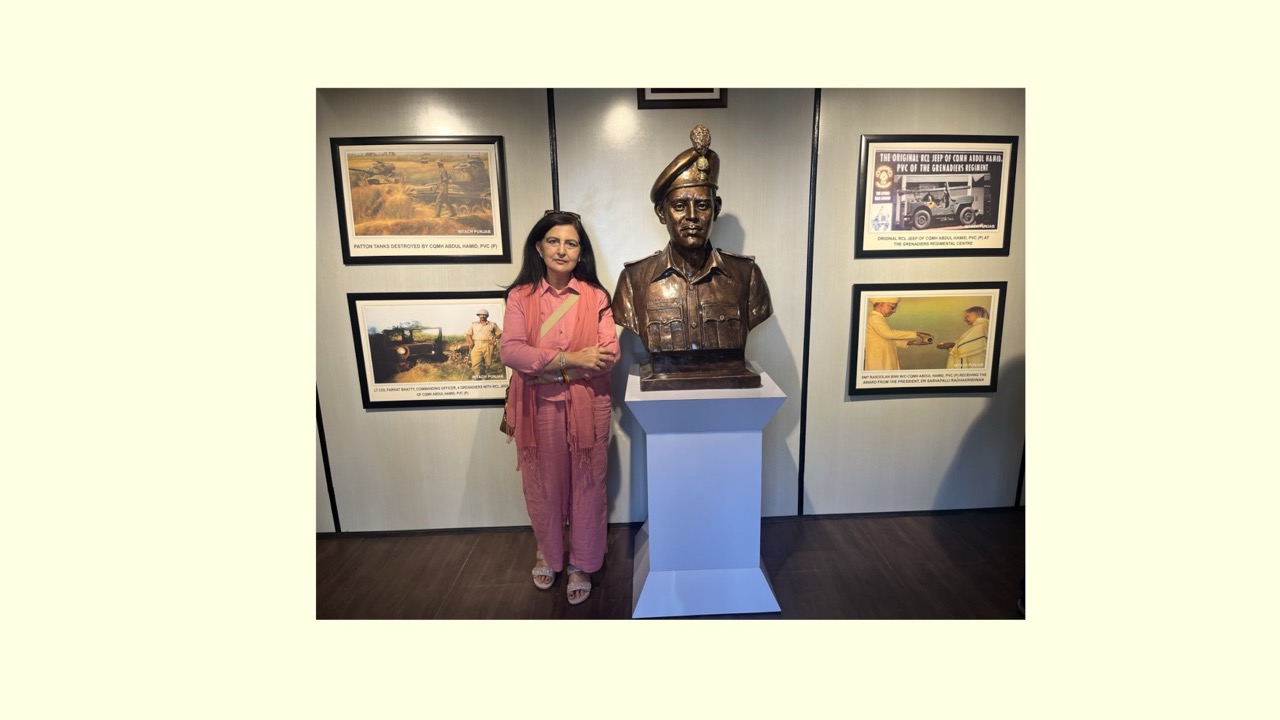
Next we walked to the Hamid Gallery-Museum 1 near the main entrance where the CQMH Abdul Hamid’s shining bust seems to welcome all and re-experience the September 8th-10th Pakistani attack in form of large captioned photos and military items. A miniature marked-model of the area can make one aware of how the Pakistani Patton tanks approached the Indian villages from the International border just 7.2 kms away and how they were confronted by the lone jeep of Abdul Hamid! There was recorded conversation similar to the last minutes of Abdul Hamid’s life when his senior officer repeatedly asked him to vacate his position after Abdul hit the third Tank but he continued to hold fort, was spotted and got hit!
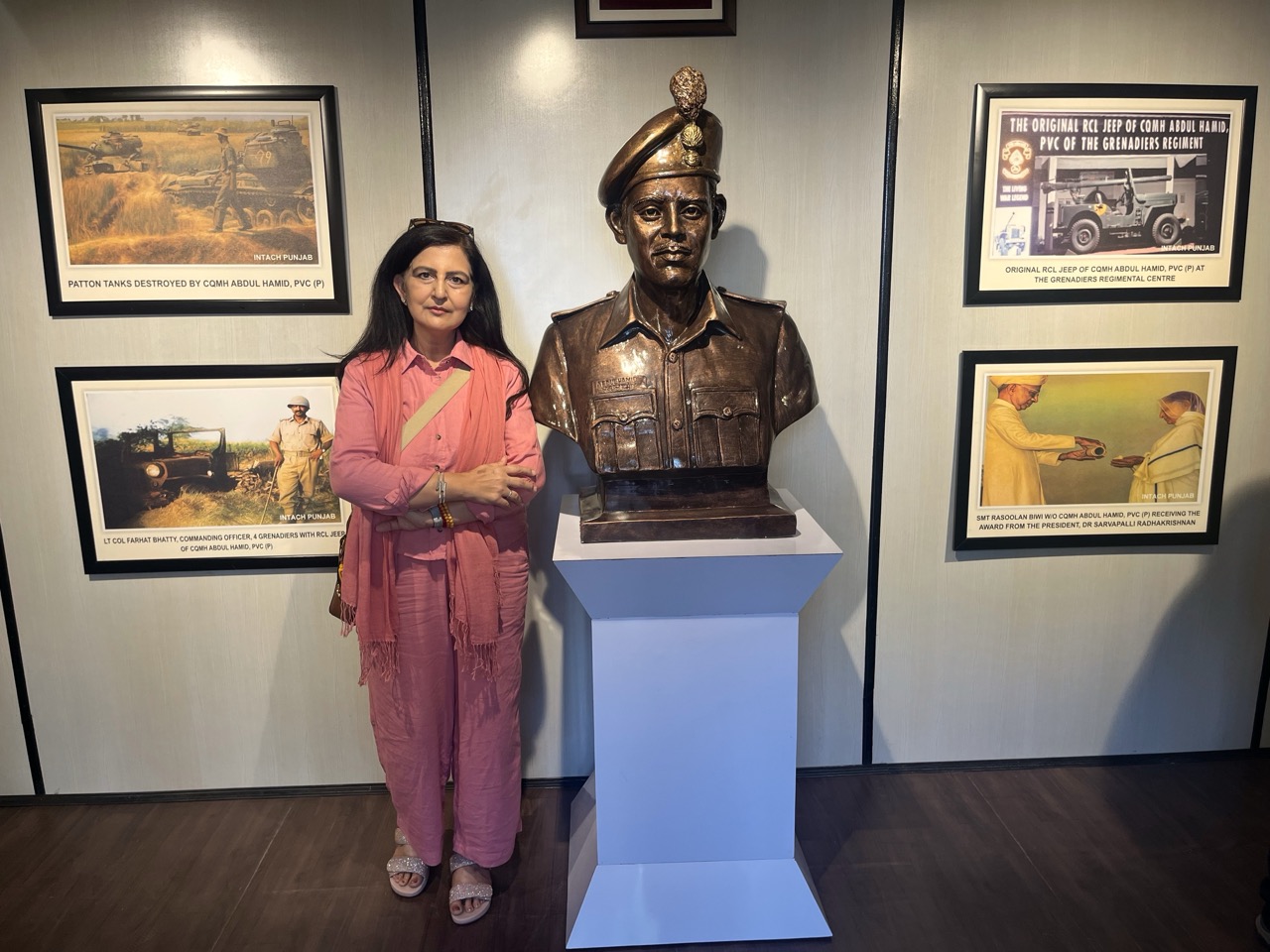
Writer at Museum dedicated to martyr Abdul Hamid
There were photographs of the Patton Tanks, his Jeep after being hit and his wife Rasoolan biwi receiving his award from the President Dr Radha-Krishnan and many more instantsthat we captured on our camera.
Finally we walked towards the eight pink-stone, Individual War Memorials of the old, decorated, amoured Regiments of the Indian army; further ahead.
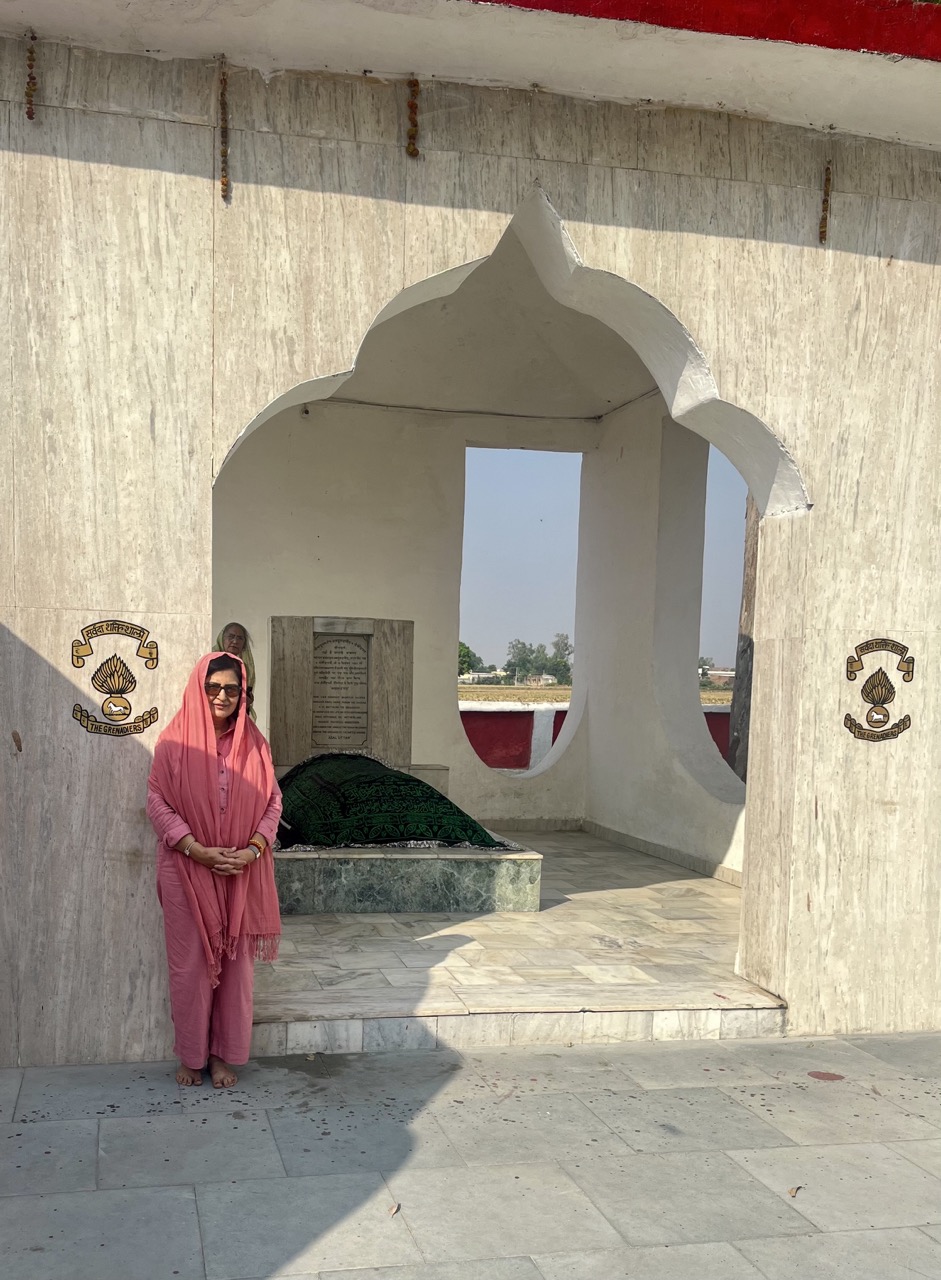
The serene-corner white marble Dargah of Abdul Hamid inside the Asal Uttar War Memorial
This was to be followed by Archives cum Museum that holds engrossing accounts of Battles fought in Khem-Karansector- Battles of Asal Uttar and Barki, 1965 & Battle of Sehjra 1971. Moving ahead I recalled the sentences at the Entrance of the War memorial-
May every step you take here remind you of the selfless sacrifices,
which have been made to defend the Motherland.
An inspiring homage to the Indian soldiers whose courage turned the tide of victory. Your words deserve a place in school history books as a chapter of their own, for they echo the spirit of those brave hearts. They belong among the pages that speak of courage and a deep love for the motherland. The quotations you have written carry a quiet, intense power~deeply stirring and profoundly inspiring.
Thank you for taking us down the memory lane. Abdul Hamid’s bravery is forever etched in our hearts and minds.
We live a carefree life because of the protection afforded to us by our brave hearts and their sacrifices.
Salute to them.
Very interesting & informative
Thanks. Soul stimulating experience
A befitting tribute to the Indian soldiers who made this victory possible. This informative narration should be made a part of history books about these wars.
The quotations you have cited are so inspiring.
As the daughter of an army officer who was also a part of these wars, I thank you for highlighting the role of these bravehearts through your writing – both educative and inspiring.
Thank you for your valuable feedback. Yes, it was a soul stirring experience